
Observe
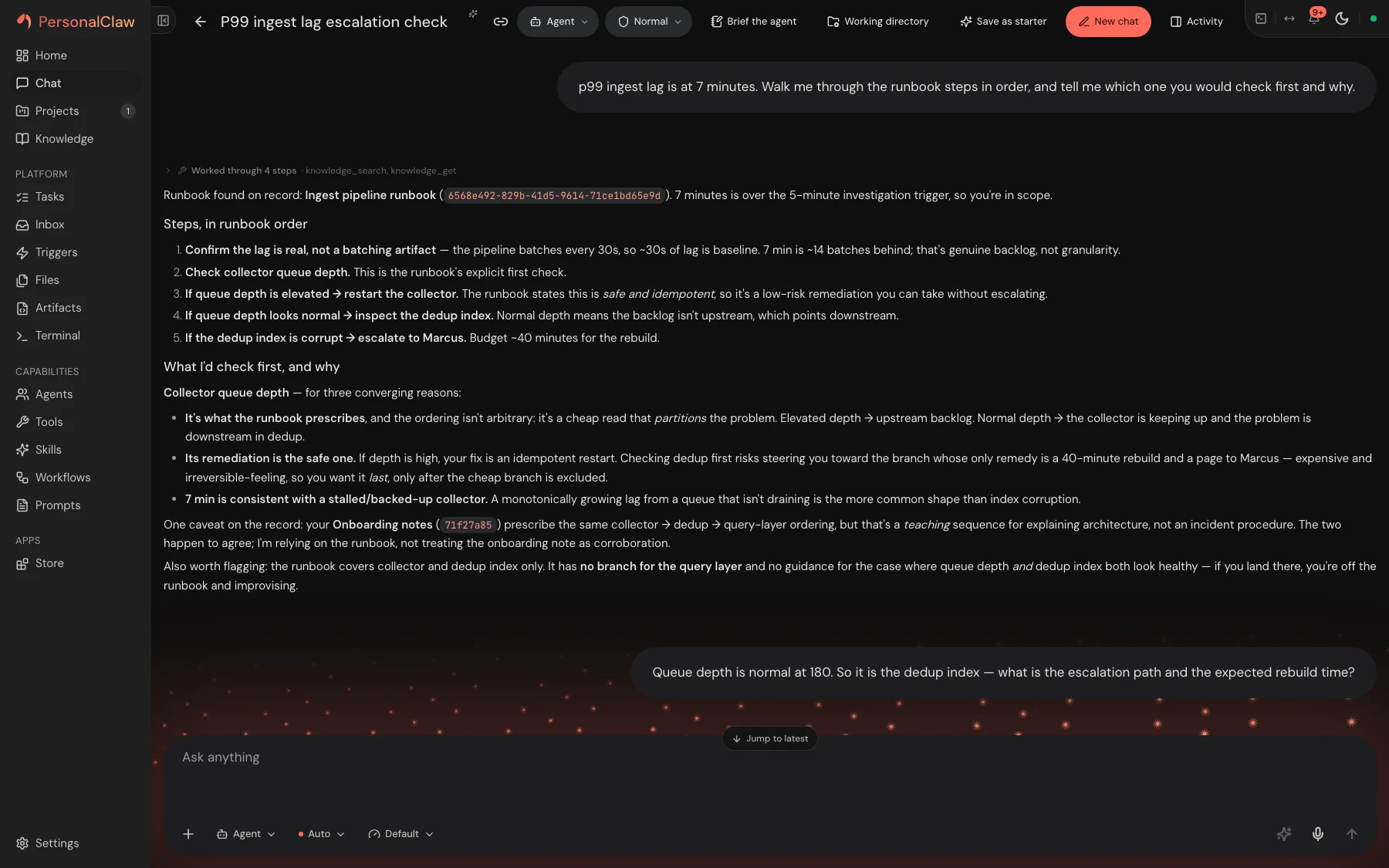
See the plan, active cycle, tool activity, and result as it happens.
Designed as a system
Chat, goal loops, and automation use the same context engine, approvals, skills, apps, and durable state.
The 84-second tour
A single recording of v0.1.3 on one machine — the version in the capture's status bar is the release this site publishes. Chat against a local model, the approval it stops on, a goal loop, the local corpus, and the file the agent actually wrote. No narration, no cuts, nothing sped up.
Agentic chat
Run tools with approval controls, organize sessions, branch from earlier turns, compare answer variants, and tune model or memory behavior per conversation.
Autonomous goals
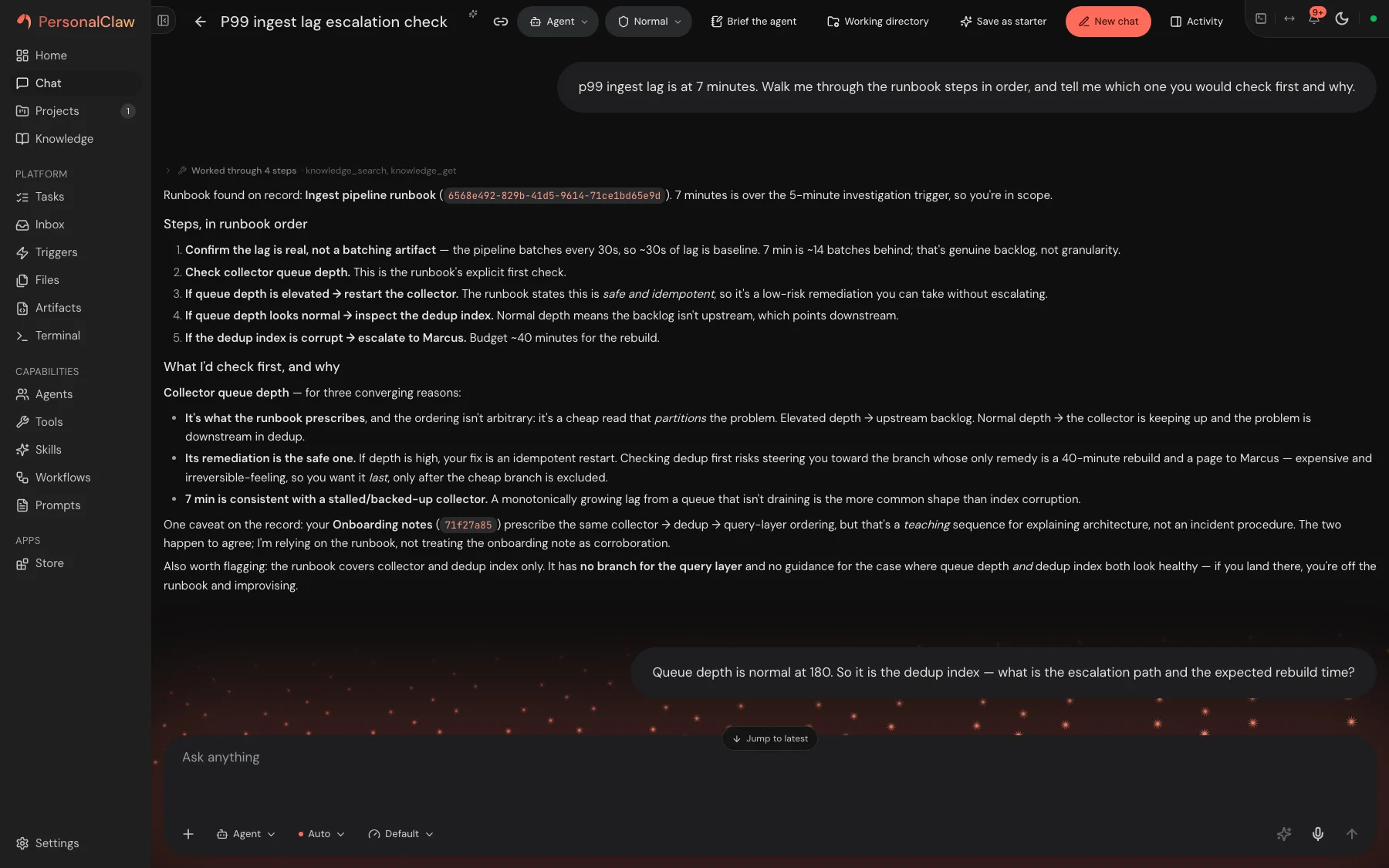
See the plan, active cycle, tool activity, and result as it happens.
Pause, nudge, resume, or stop without losing the accumulated run state.
Deterministic supervisors and approval modes constrain autonomous action.
Durable context
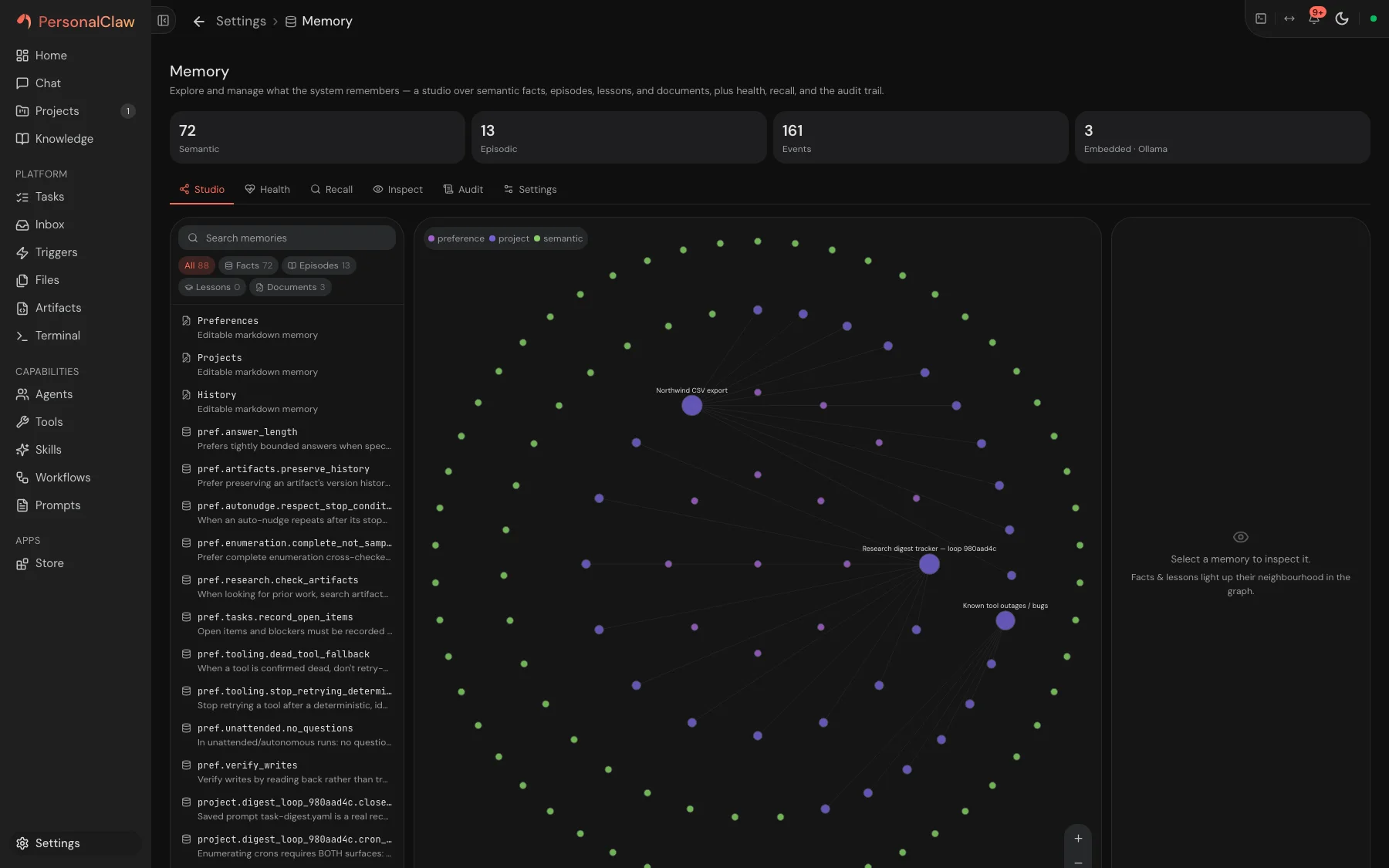
PersonalClaw keeps learned personal context separate from the source material you deliberately add. Both remain inspectable.
Semantic, episodic, and procedural layers support recall, correction learning, and promotion of repeated facts.
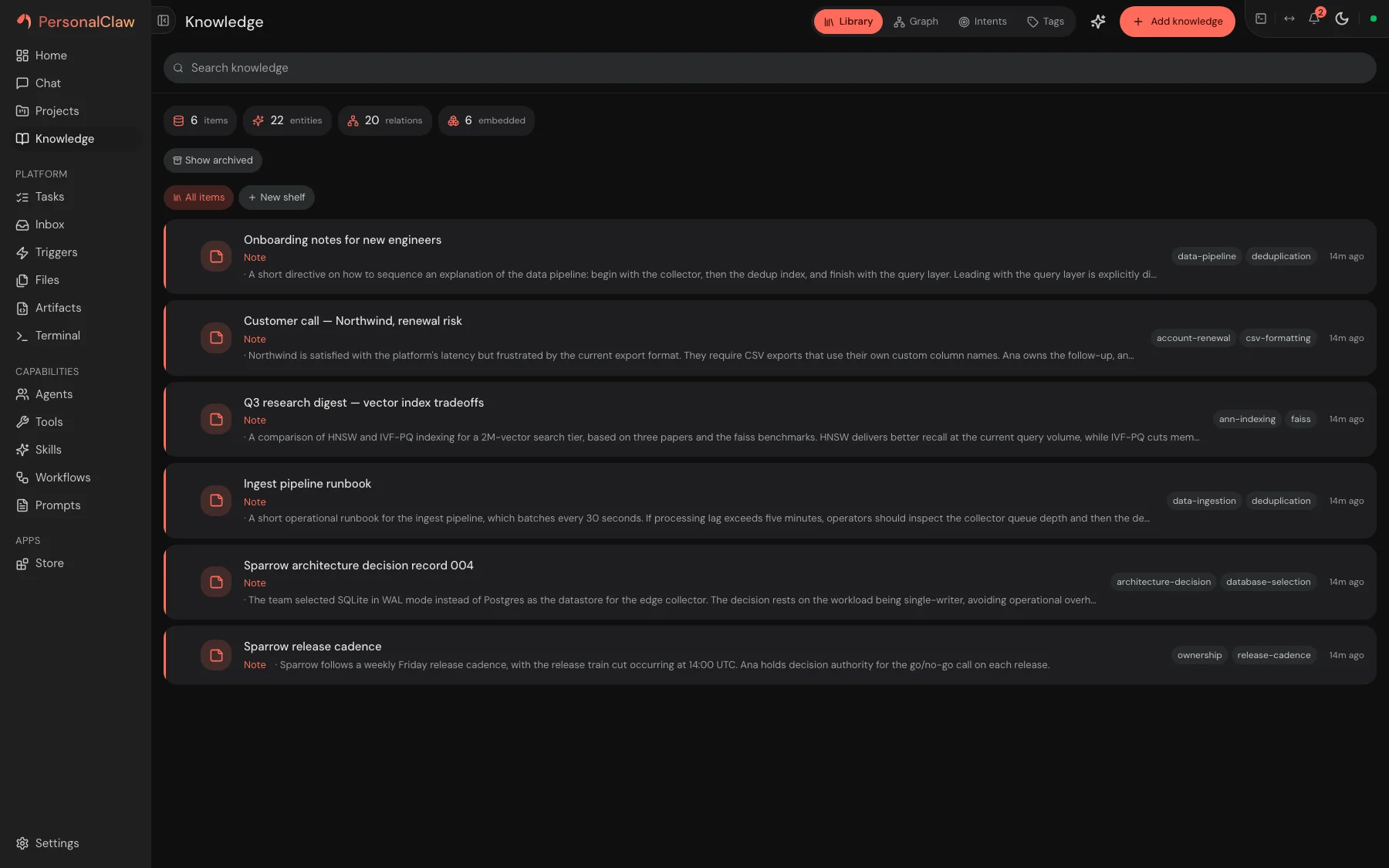
Ingest documents, web pages, and media; enrich them with entities and make them searchable from chat.
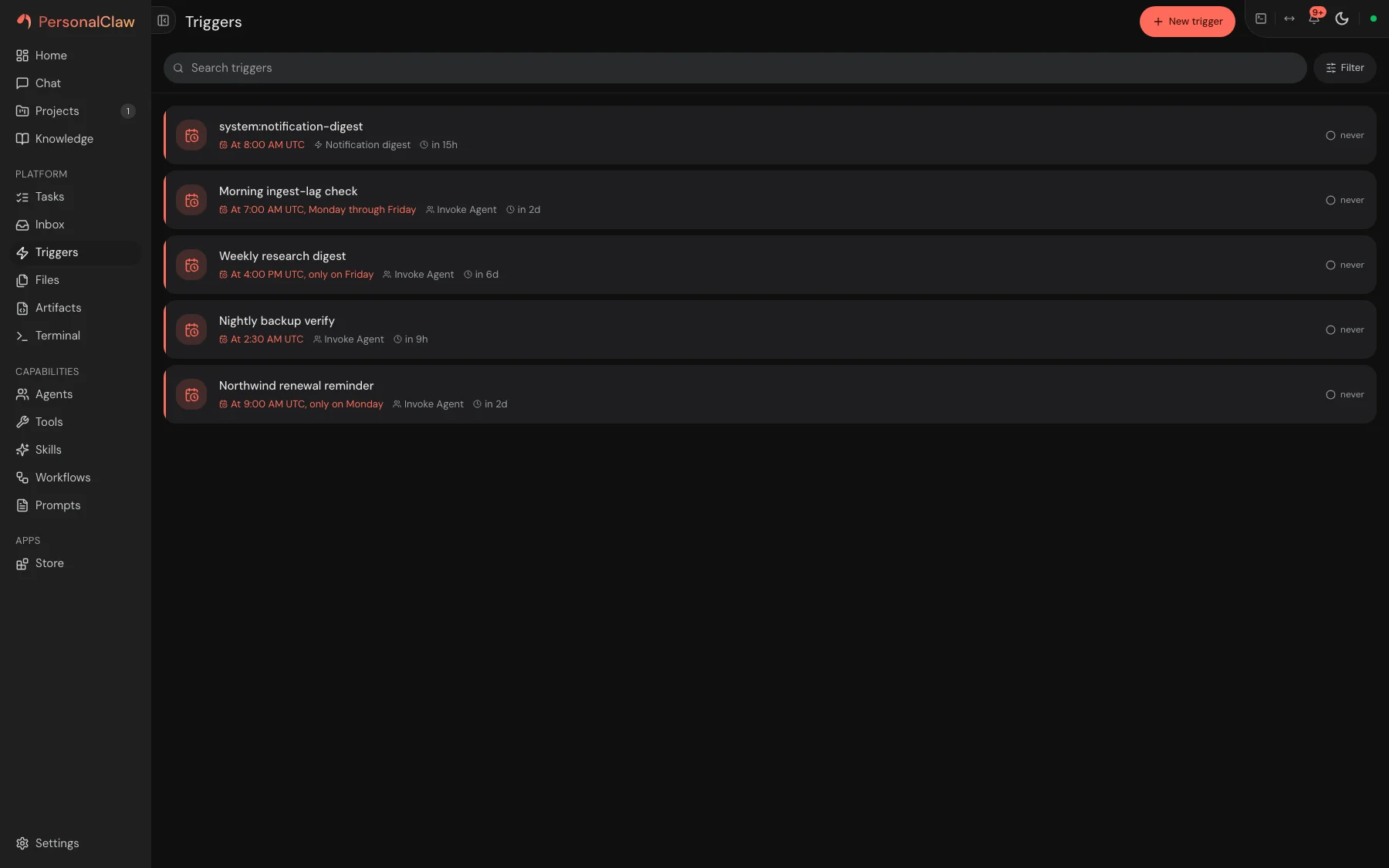
Automation
Schedule recurring work, react to webhooks, monitor connected channels, and dispatch background subagents without building a second automation stack. Anything that needs you lands in one inbox you can answer in place — a loop waiting on a decision, a proposed skill, an approval you walked away from.
One place to answer
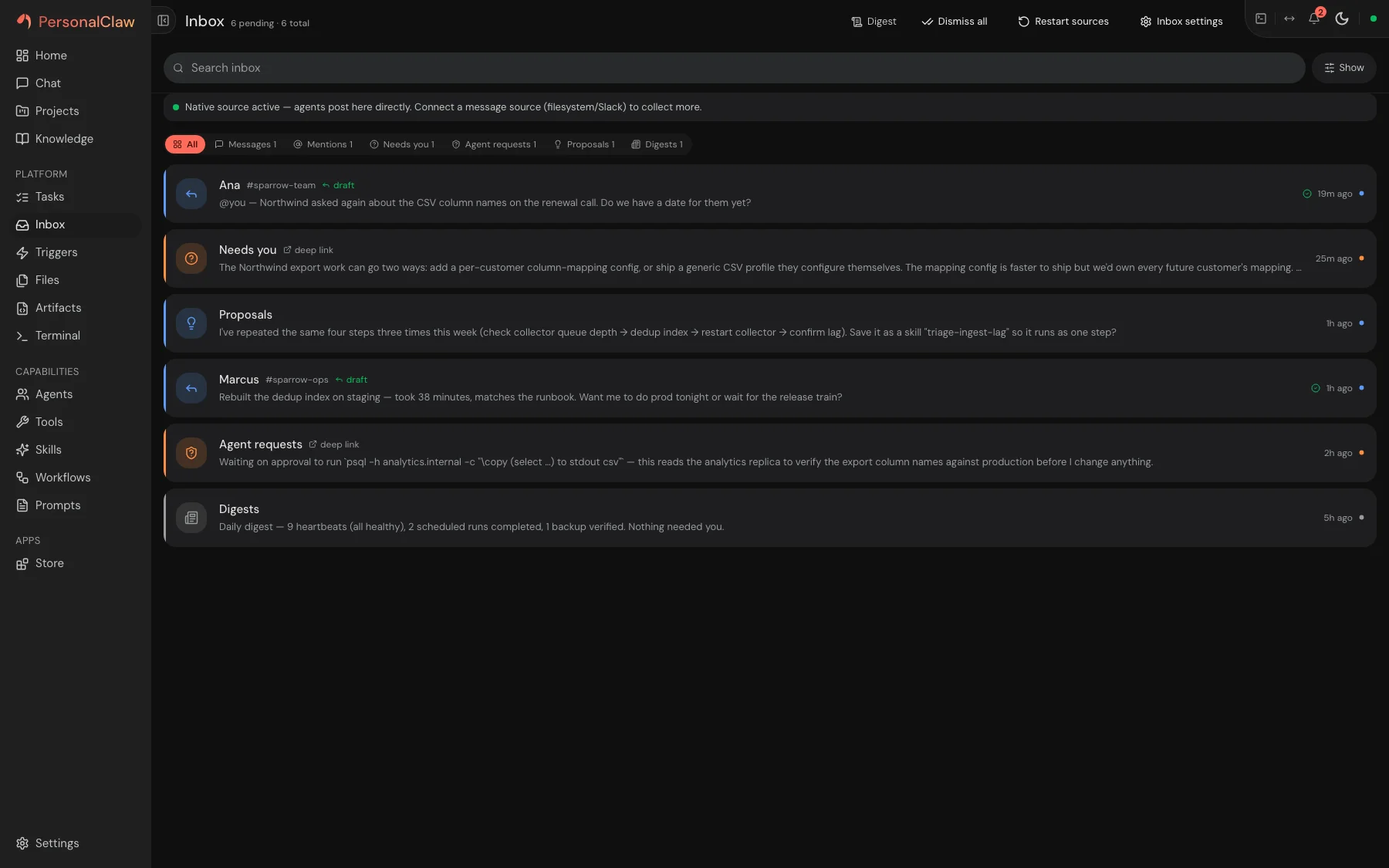
A loop needing a decision, a proposed skill, an approval you walked away from — these used to be toasts that scrolled past while the work stayed stalled. Now they are items you answer in place.
Decisions, proposals, approvals, and messages share one inbox. Each row deep-links to the loop or chat it came from.
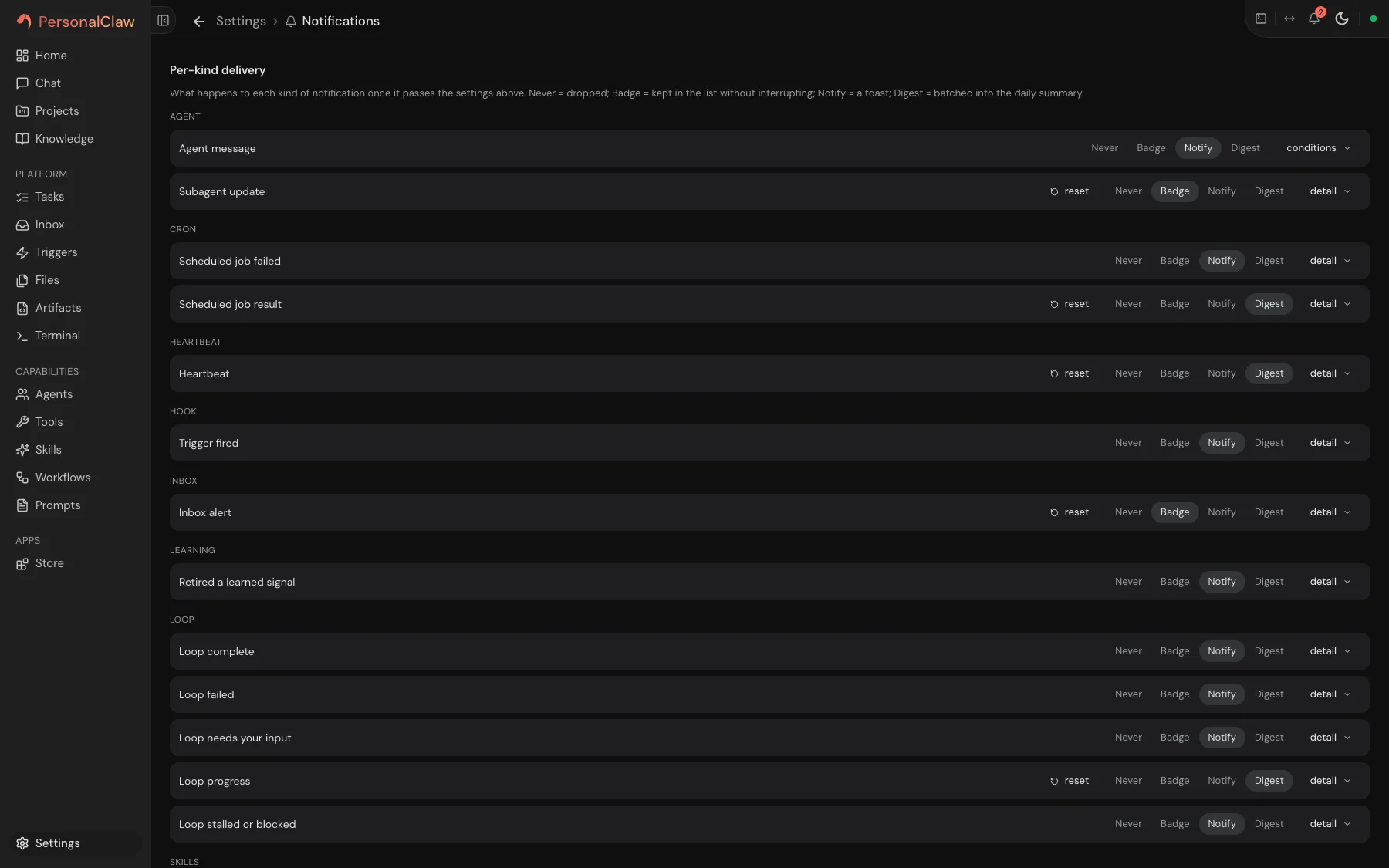
Per kind of notification: notify, badge, batch into a daily digest, or never. Quietening one noisy kind no longer raises the bar for everything.
What it produced
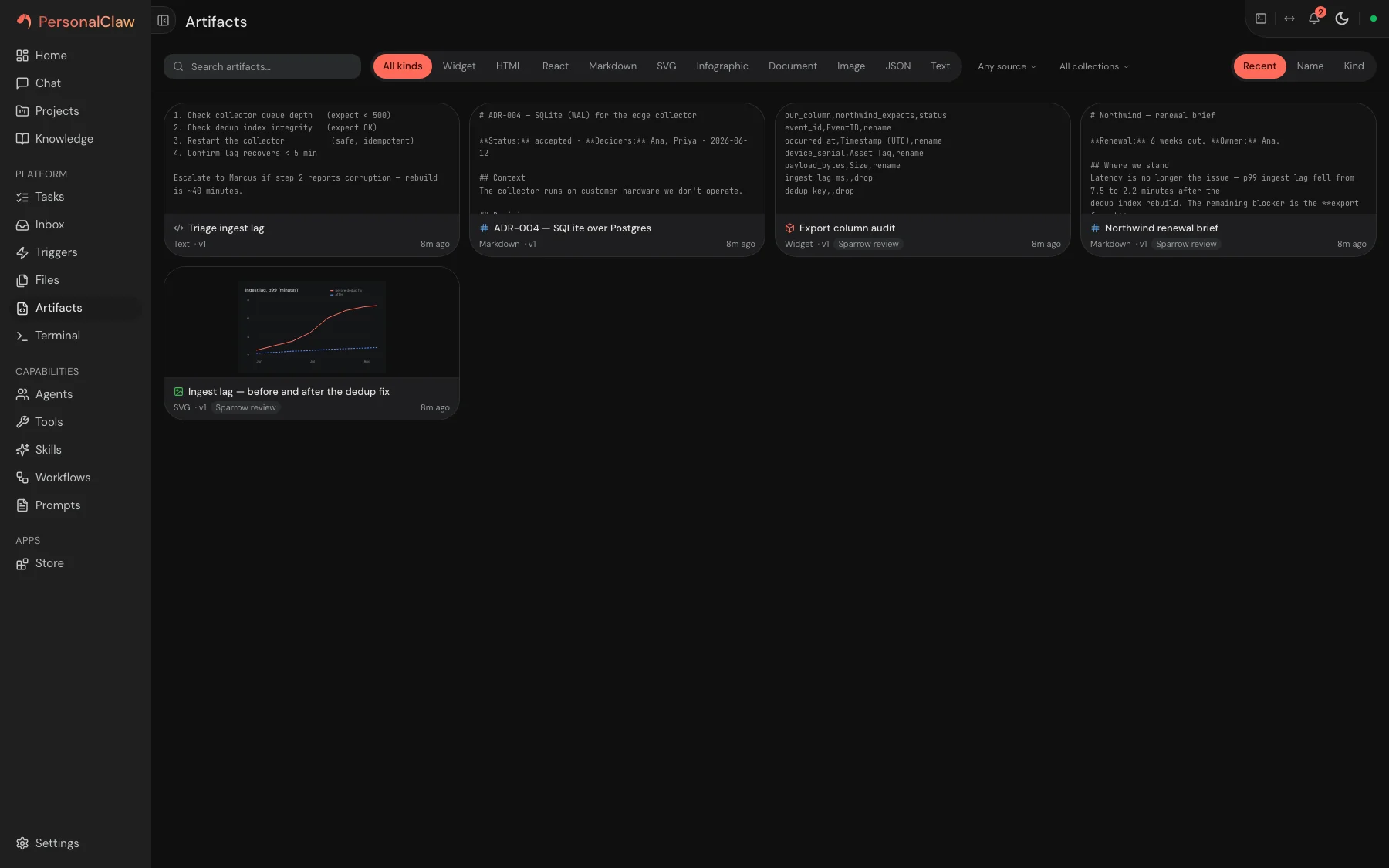
Documents, spreadsheets, charts, and diagrams the agent made stay in a library with live previews — searchable, versioned, and grouped into collections instead of scattered through a chat log.
Bring the right agent
PersonalClaw can run its native agent or connect external coding agents through ACP. Claude Code, OpenAI Codex, and Kiro CLI remain behind the same host approval boundary.
Explore agent apps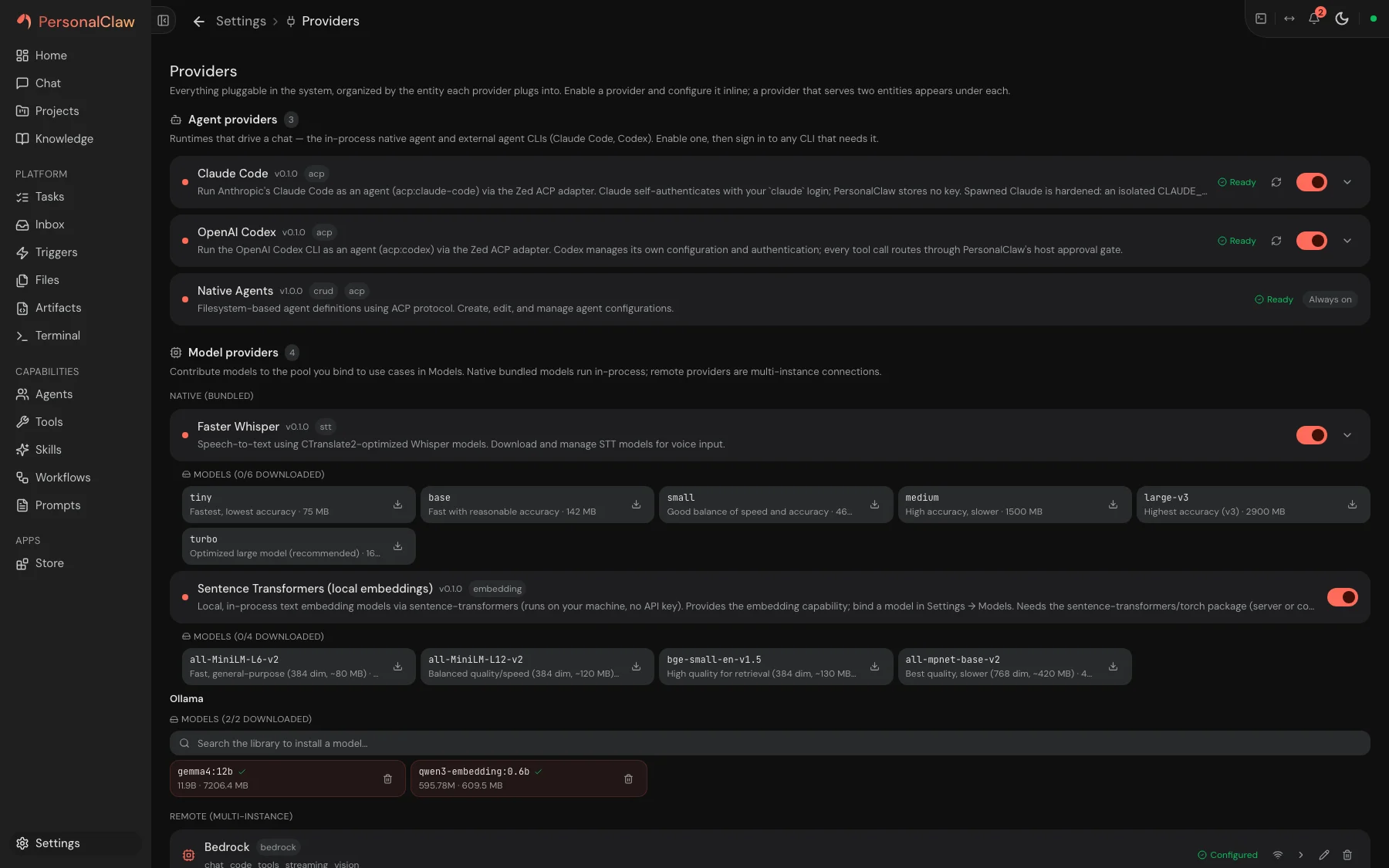
Runs safely on its own
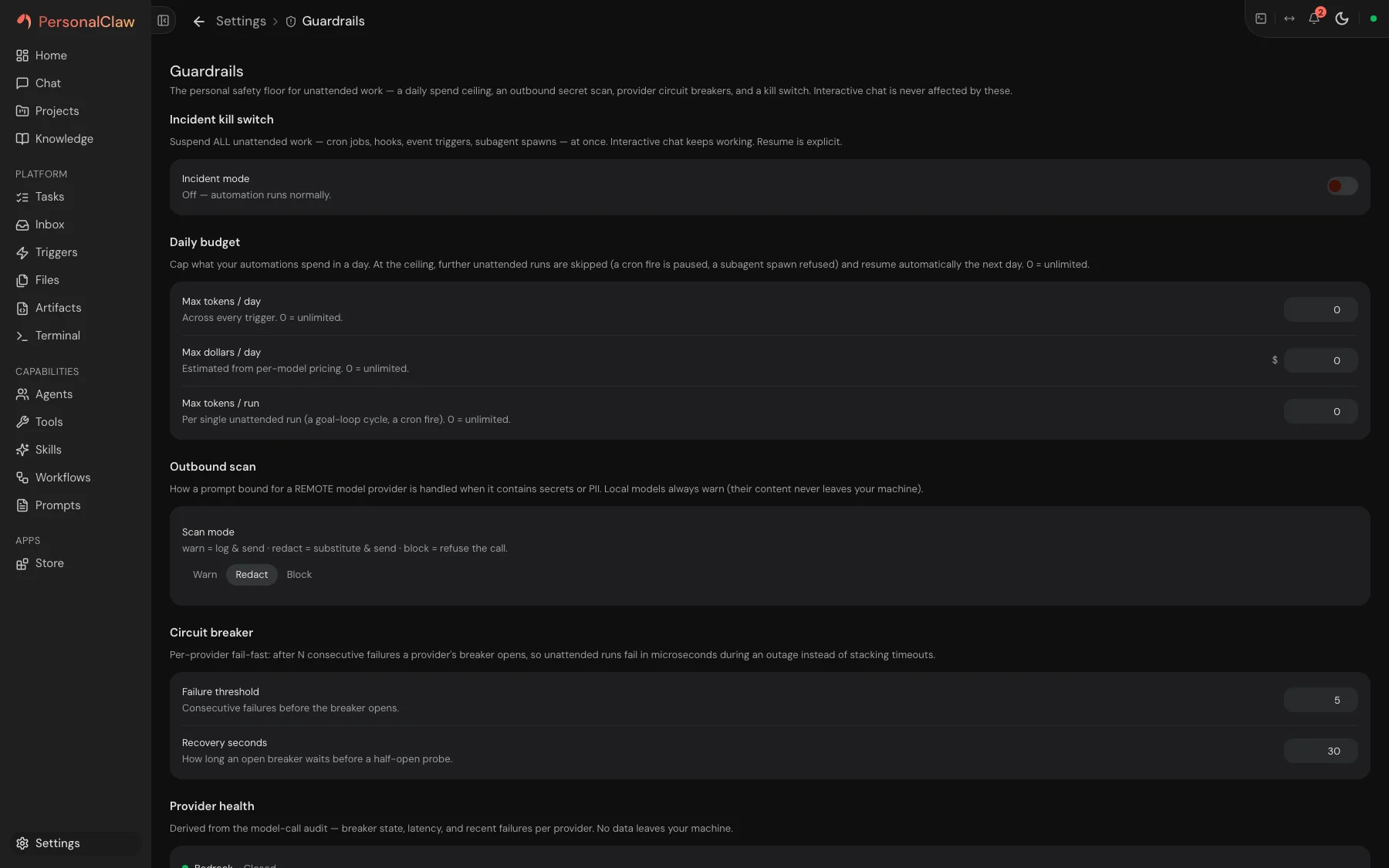
Before you hand the system unattended work, it gives you the controls to trust it: a kill switch that suspends every automation at once, daily spend ceilings, outbound secret scanning, and per-provider circuit breakers. Interactive chat is never affected.
Diagnoses itself
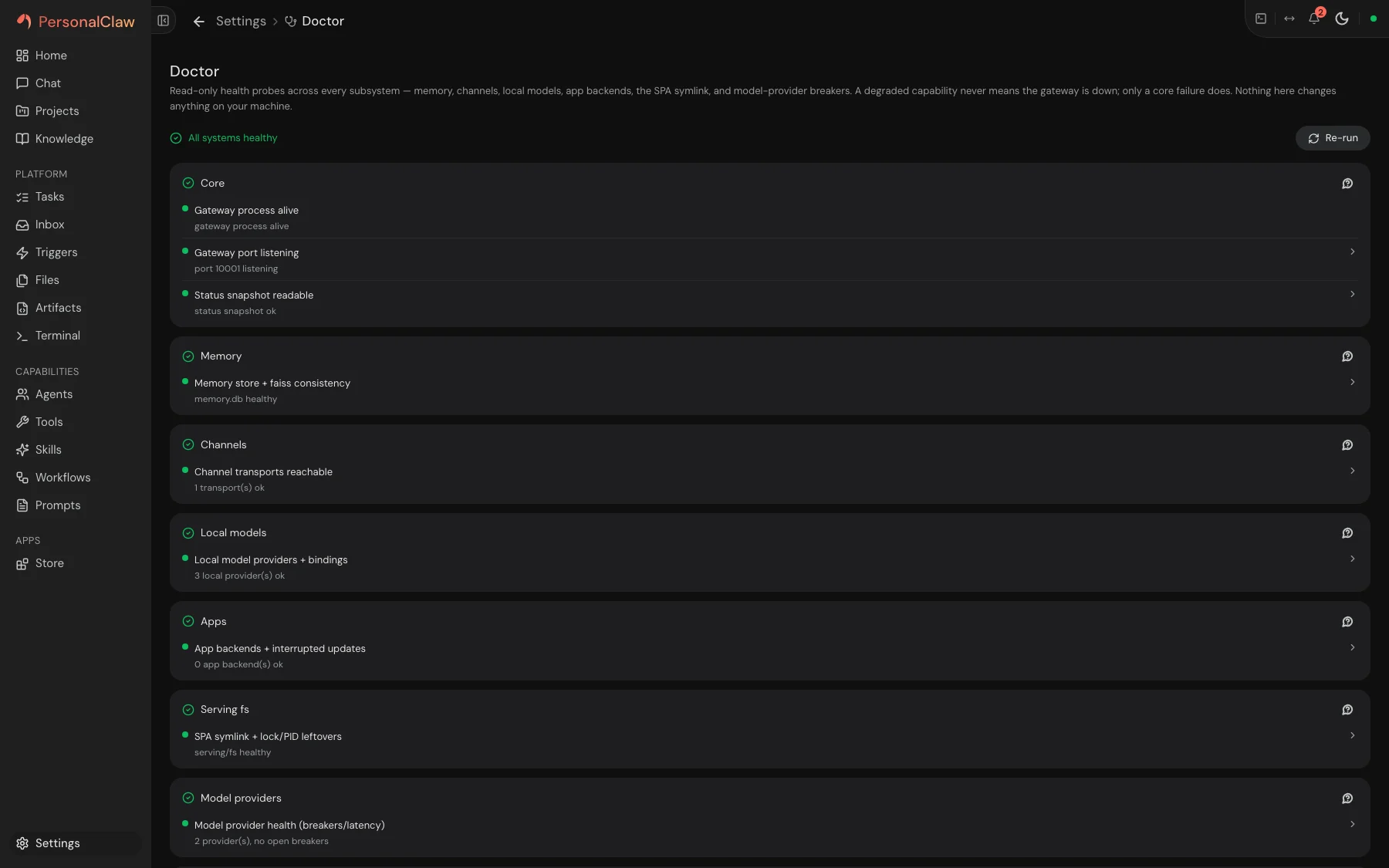
The Doctor runs read-only health probes across every subsystem — memory, channels, local models, app backends, the SPA, model-provider breakers. A degraded capability is never mistaken for a dead gateway, confirm-gated fixes repair the common faults, and a health-scored engine keeps the stores tidy on its own.
Open source · self-hosted
Python 3.12, an aiohttp gateway, React dashboard, SQLite state, and no product telemetry.